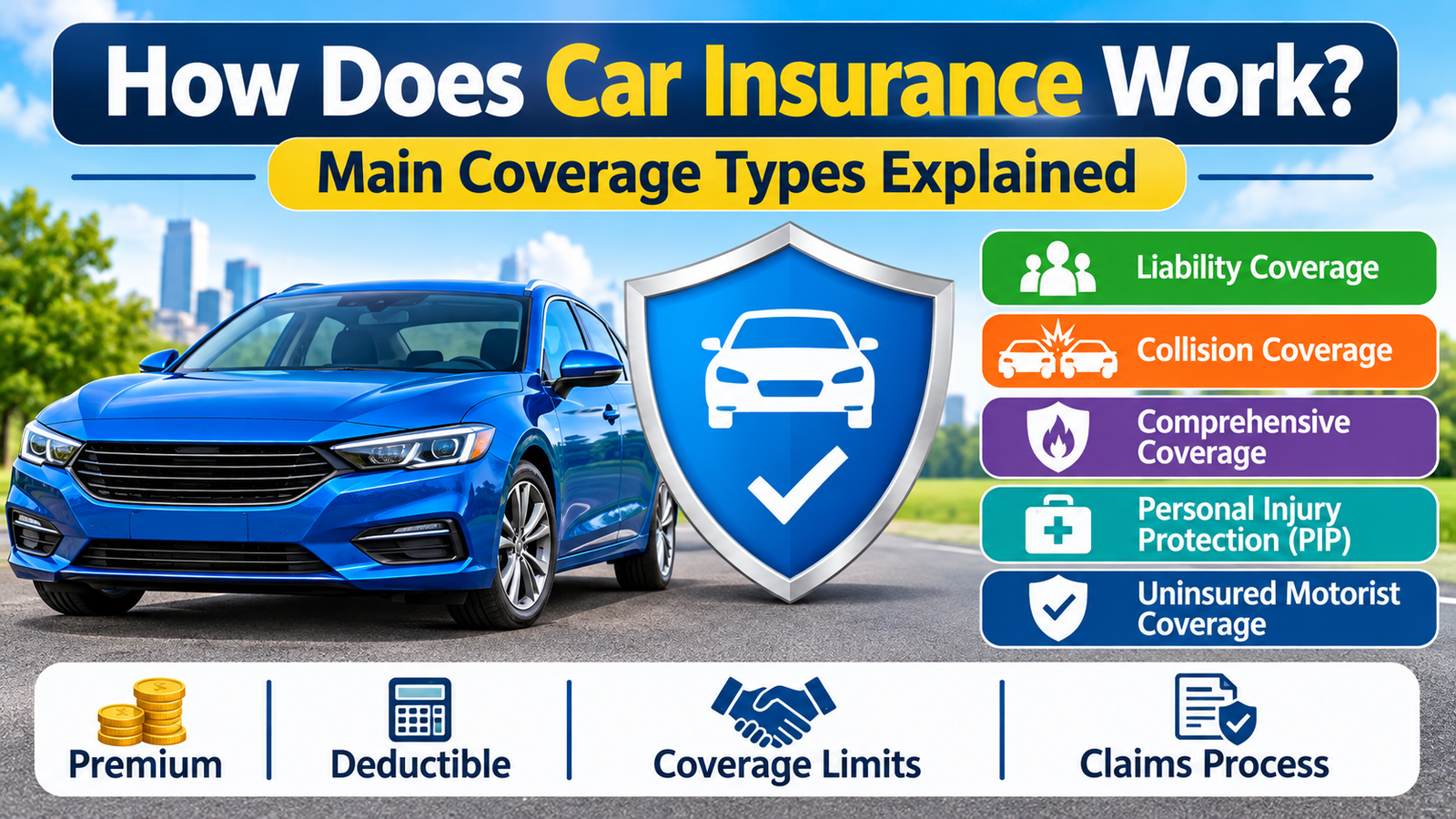
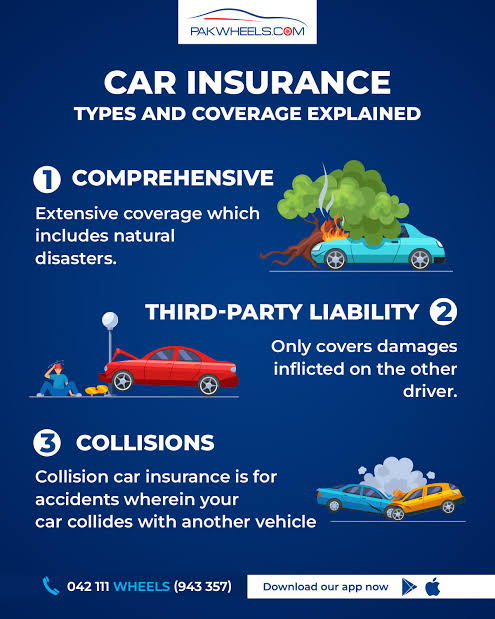
Car insurance is a contract that helps protect drivers financially when accidents, vehicle damage, theft, or other covered events occur. In the United States, drivers pay premiums to an insurance company in exchange for coverage that may help pay for property damage, medical expenses, legal liability, and vehicle repairs, depending on the policy. Understanding how car insurance works involves learning about different coverage types, deductibles, premiums, policy limits, and the claims process. Some types of coverage are required by state law, while others are optional or required by a lender. Knowing what these terms mean can help drivers understand their financial responsibilities and the protection provided by an auto insurance policy.
1. What Is Car Insurance and Why Does It Matter?
Car insurance is a financial protection arrangement between a vehicle owner or driver and an insurance company. The policyholder pays a premium, and the insurer agrees to cover certain financial losses resulting from specified incidents, subject to the policy’s conditions, exclusions, and limits.
Car insurance is important because vehicle accidents can create several types of expenses. These may include repairing damaged vehicles, paying medical bills, replacing stolen property, and addressing claims made by other people involved in an accident.
Without applicable insurance coverage, a driver may have to pay certain expenses personally. Depending on the circumstances and state laws, an accident may also create legal or financial responsibilities.
In most US states, drivers must maintain some form of financial responsibility, commonly satisfied through auto liability insurance. Requirements differ by state, and some jurisdictions recognize other approved ways of demonstrating financial responsibility.
Car insurance policies can include several coverage types, each designed to address a different category of financial loss. A policy may combine mandatory and optional protections depending on the driver’s circumstances and applicable requirements.
2. How Does Car Insurance Work?
Car insurance generally works by transferring certain financial risks from the policyholder to an insurance company. In return for premium payments, the insurer agrees to handle eligible claims according to the policy.
The process typically follows these steps:
Step 1: Purchase an insurance policy
A driver applies for coverage and provides information about the vehicle, driving history, location, and other relevant details. The insurer uses this information, along with applicable rating rules, to determine eligibility and pricing.
Step 2: Pay the premium
The policyholder pays the required premium to maintain coverage. Payments may be made monthly, in installments, or according to another arrangement established by the insurer.
Step 3: Maintain active coverage
The insurance policy provides protection during its effective period, subject to its terms. Drivers generally need to keep payments current and follow applicable policy requirements.
Step 4: An accident or covered event occurs
A claim may arise after an accident, vehicle theft, vandalism, weather-related damage, or another covered incident.
Step 5: Report the incident and file a claim
The policyholder or another affected person reports the incident to the relevant insurance company. The insurer may request photographs, police reports, repair estimates, statements, and other supporting information.
Step 6: The insurance company reviews the claim
The insurer investigates the circumstances, determines applicable coverage, evaluates the damage or loss, and considers responsibility where relevant.
Step 7: Payment or claim resolution
If the claim is covered, the insurer may arrange payment for eligible losses, subject to deductibles, coverage limits, exclusions, and other policy conditions.
Not every claim results in payment. A loss may be excluded, fall outside the policy’s effective dates, or exceed applicable coverage limits.
3. Main Types of Car Insurance Coverage in the United States
Auto insurance policies can contain several coverage categories. Each addresses different risks, and the availability and requirements of particular coverage types depend on state law and the insurance contract.
Liability Insurance
Liability insurance helps cover certain expenses when an insured driver is legally responsible for injuries to other people or damage to their property.
It generally includes two components:
- Bodily injury liability: May cover eligible medical expenses, lost income, and other covered damages arising from injuries to other people.
- Property damage liability: May cover damage to another person’s vehicle or other property resulting from an accident for which the insured driver is legally responsible.
Liability coverage generally does not pay to repair the policyholder’s own vehicle after an accident they caused.
Most states require some form of auto liability coverage, although the specific requirements and rules vary.
Collision Coverage
Collision coverage helps pay for damage to the insured vehicle resulting from a collision with another vehicle or object, subject to the policy.
For example, it may apply when a driver hits another car, strikes a fence, or collides with a stationary object.
Collision coverage generally applies regardless of who caused the accident, although payment and responsibility can depend on the policy and circumstances. A deductible commonly applies.
Comprehensive Coverage
Comprehensive coverage helps pay for certain types of vehicle damage that are not caused by a collision.
Covered events may include:
- Vehicle theft.
- Fire damage.
- Vandalism.
- Hail or certain storm damage.
- Falling objects.
- Certain animal-related damage.
Comprehensive coverage is subject to exclusions and deductibles. It does not cover every possible type of vehicle loss.
Personal Injury Protection (PIP)
Personal Injury Protection, commonly called PIP, helps cover certain medical and related expenses after an automobile accident, regardless of fault, subject to state law and policy terms.
Depending on the applicable coverage, benefits may include eligible medical expenses, lost income, or certain necessary services.
PIP is required in some states and optional or unavailable in others. The exact benefits and coordination rules vary by jurisdiction.
Medical Payments Coverage (MedPay)
Medical Payments coverage helps pay certain medical and funeral expenses resulting from injuries sustained in a covered automobile accident.
It may apply to the policyholder and other covered occupants, depending on the policy.
Unlike liability insurance, MedPay generally does not depend on establishing that the insured driver was legally responsible for the accident. Its availability and relationship with other benefits vary by state and policy.
Uninsured and Underinsured Motorist Coverage
Uninsured motorist coverage may help when an insured person is injured by a driver who has no applicable liability insurance.
Underinsured motorist coverage may apply when the responsible driver’s liability coverage is insufficient to cover eligible damages.
Depending on state rules and policy terms, these coverages may address bodily injuries and, in some jurisdictions, certain vehicle damage.
4. Understanding Car Insurance Premiums, Deductibles, and Coverage Limits
Three important concepts determine how much a driver pays for insurance and how much financial protection a policy provides.
Car Insurance Premium
A premium is the amount paid to maintain an auto insurance policy.
Insurance companies may consider several factors when calculating premiums, including:
- Driving history and claims experience.
- Vehicle make, model, and characteristics.
- Geographic location.
- Annual mileage and vehicle usage.
- Selected coverage types and limits.
- Other rating factors permitted by applicable law.
Premiums can change when a policy is renewed or when relevant information changes.
Car Insurance Deductible
A deductible is the amount the policyholder must pay toward an applicable covered loss before the insurer pays its share.
Deductibles commonly apply to collision and comprehensive coverage, although the specific arrangements depend on the policy.
Coverage Limits
A coverage limit is the maximum amount an insurance company will pay for a particular covered claim or category of loss, subject to the policy.
For example, liability policies may have separate limits for injuries to one person, injuries to multiple people in an accident, and property damage.
Understanding these limits is important because expenses exceeding applicable coverage may remain the responsibility of the person who owes them.
Hypothetical Example 1: Understanding a Car Insurance Deductible
Imagine a driver has collision coverage with a $1,000 deductible. The driver causes an accident that results in $5,000 of eligible damage to their insured vehicle.
Assuming the damage is covered and the insurer approves the full repair amount:
- Total covered repair cost: $5,000.
- Policyholder’s deductible: $1,000.
- Insurance company’s payment: $4,000.
The driver pays the deductible, while the insurer covers the remaining eligible amount.
This example is hypothetical and illustrative only. Actual claim payments depend on the policy, damage assessment, and applicable coverage conditions.
5. How the Car Insurance Claims Process Works
A car insurance claim is a formal request for payment or other coverage-related assistance following an accident or covered event.
The process may differ depending on the type of claim, the insurer, state regulations, and whether another driver is involved.
Reporting the Incident
After an accident, drivers generally need to notify the appropriate insurance company according to the policy’s reporting requirements.
Depending on the circumstances, supporting documentation may include:
- Accident details and the date of the incident.
- Photographs of vehicle damage.
- Contact and insurance information from other involved parties.
- Police or incident reports, when available or required.
- Repair estimates and relevant receipts.
Claim Investigation
The insurance company reviews the available information to determine what happened and whether the policy covers the loss.
For liability claims, the insurer may investigate fault and evaluate the damages. The process can involve reviewing statements, photographs, reports, and other evidence.
Damage Assessment and Payment
For vehicle damage claims, the insurer may arrange an inspection or request repair estimates. Payment generally depends on the approved covered loss, deductible, policy limits, and other applicable conditions.
If a claim is denied or the policyholder disagrees with the settlement, they can request an explanation and review the insurer’s complaint or appeal procedures where available.
Hypothetical Example 2: Understanding Liability Coverage
Imagine a driver accidentally hits another vehicle and is determined to be legally responsible for $8,000 in covered property damage.
The driver’s policy has a $10,000 property damage liability limit.
Assuming the entire amount is covered and no other policy conditions affect payment, the insurer may pay the eligible $8,000 claim.
If covered damages exceed the applicable policy limit, the driver may remain personally responsible for the amount above that limit.
This example is hypothetical and illustrative only. Actual liability and payment decisions depend on the circumstances, applicable law, and insurance contract.
6. What Does Car Insurance Usually Not Cover?
Car insurance provides financial protection for specified risks, but it does not cover every vehicle-related expense.
Common limitations and exclusions may include:
- Normal vehicle wear and tear.
- Mechanical breakdowns unrelated to a covered event.
- Routine maintenance and servicing.
- Damage arising from excluded activities or circumstances.
- Personal belongings stolen from a vehicle, unless covered under another applicable policy.
- Certain business or commercial vehicle uses not included in the policy.
- Losses exceeding applicable coverage limits.
An auto insurance policy may also contain requirements involving authorized drivers, vehicle usage, accident reporting, and cooperation with claim investigations.
For example, a personal auto policy may not provide the same protection for a vehicle used regularly for certain commercial activities.
Drivers should review the policy’s declarations page, coverage sections, exclusions, and conditions to understand what is and is not insured.
7. Key Takeaways
- Car insurance helps drivers manage financial losses resulting from covered accidents, vehicle damage, theft, and other specified events.
- Liability insurance generally covers eligible injuries and property damage suffered by others when the insured driver is legally responsible.
- Collision and comprehensive coverage address different types of damage to the insured vehicle.
- Premiums, deductibles, and coverage limits determine the policyholder’s costs and the insurer’s financial responsibility.
- Insurance requirements, coverage availability, and policy conditions vary by state and insurer.
8. Frequently Asked Questions About Car Insurance
1. Is car insurance required in every US state?
Most states require drivers to maintain some form of financial responsibility, commonly through auto liability insurance. However, requirements and accepted alternatives vary by jurisdiction. Some states have different systems or special provisions. Drivers should consult their state’s Department of Insurance or motor vehicle agency for current requirements.
2. What is the difference between liability and full coverage car insurance?
Liability insurance addresses eligible injuries and property damage suffered by others when the insured driver is legally responsible. The term full coverage is an informal expression, not a standardized policy definition. It commonly refers to liability coverage combined with collision and comprehensive coverage, but actual protection depends on the policy.
3. Does car insurance cover damage to your own vehicle?
It depends on the coverage included in the policy. Collision coverage may help pay for damage caused by a collision, while comprehensive coverage may address certain noncollision events, such as theft or hail. Liability insurance generally does not pay to repair the insured driver’s own vehicle when they cause an accident.
4. What happens if someone drives without car insurance?
Driving without required insurance or another accepted form of financial responsibility can result in consequences under state law. Depending on the jurisdiction, these may include fines, license or registration suspension, and personal responsibility for accident-related expenses. Specific consequences vary, so drivers should check their state’s current requirements.
5. Does car insurance cover another person driving your car?
Coverage may extend to another person driving the insured vehicle with permission, but this depends on the policy, applicable state law, and the circumstances. Restrictions may apply to excluded drivers, unauthorized use, or particular vehicle arrangements. Policyholders should review their contract rather than assume every driver is covered.
Conclusion
Understanding how car insurance works helps drivers recognize the financial protection provided by different coverage types. Liability, collision, comprehensive, personal injury protection, and uninsured motorist coverage address different risks, while premiums, deductibles, and policy limits determine how costs are shared. However, no auto insurance policy covers every possible loss, and state requirements and contract terms can vary significantly. Reviewing official state insurance information and understanding the details of an insurance contract can help drivers identify their responsibilities and better understand how auto insurance claims are handled.
Sources and Further Reading
The following US organizations provide reliable information about auto insurance, consumer protection, and state insurance regulations.
- National Association of Insurance Commissioners (NAIC) – Consumer resources about auto insurance, coverage terminology, and state insurance regulation.
https://content.naic.org/consumer - Insurance Information Institute (III) – Educational resources explaining auto insurance coverage, liability, collision, comprehensive insurance, and claims.
https://www.iii.org/ - Your State Department of Insurance – Official information about state-specific auto insurance requirements, consumer rights, insurance complaints, and regulatory rules.
https://content.naic.org/state-insurance-departments - National Highway Traffic Safety Administration (NHTSA) – Information about vehicle safety, road safety, and motor vehicle regulations.
https://www.nhtsa.gov/ - USA.gov – Government information and resources that can help consumers locate relevant state and federal agencies.
https://www.usa.gov/
Disclaimer
This article is provided for educational purposes only and does not constitute insurance, financial, tax, medical, or legal advice. No guarantees or promises are made regarding coverage, claim approval, savings, premiums, or any other results. All examples are hypothetical and intended only to explain general auto insurance concepts. This article does not state time-sensitive figures such as premiums, deductibles, coverage limits, or enrollment dates; readers should consult official sources such as the NAIC and their state Department of Insurance for current information. Readers should consult a licensed insurance professional or qualified advisor before making insurance decisions.
About the Author
[Author Name] is [credentials/experience in insurance, finance, writing, or research]. [One or two sentences about expertise.]