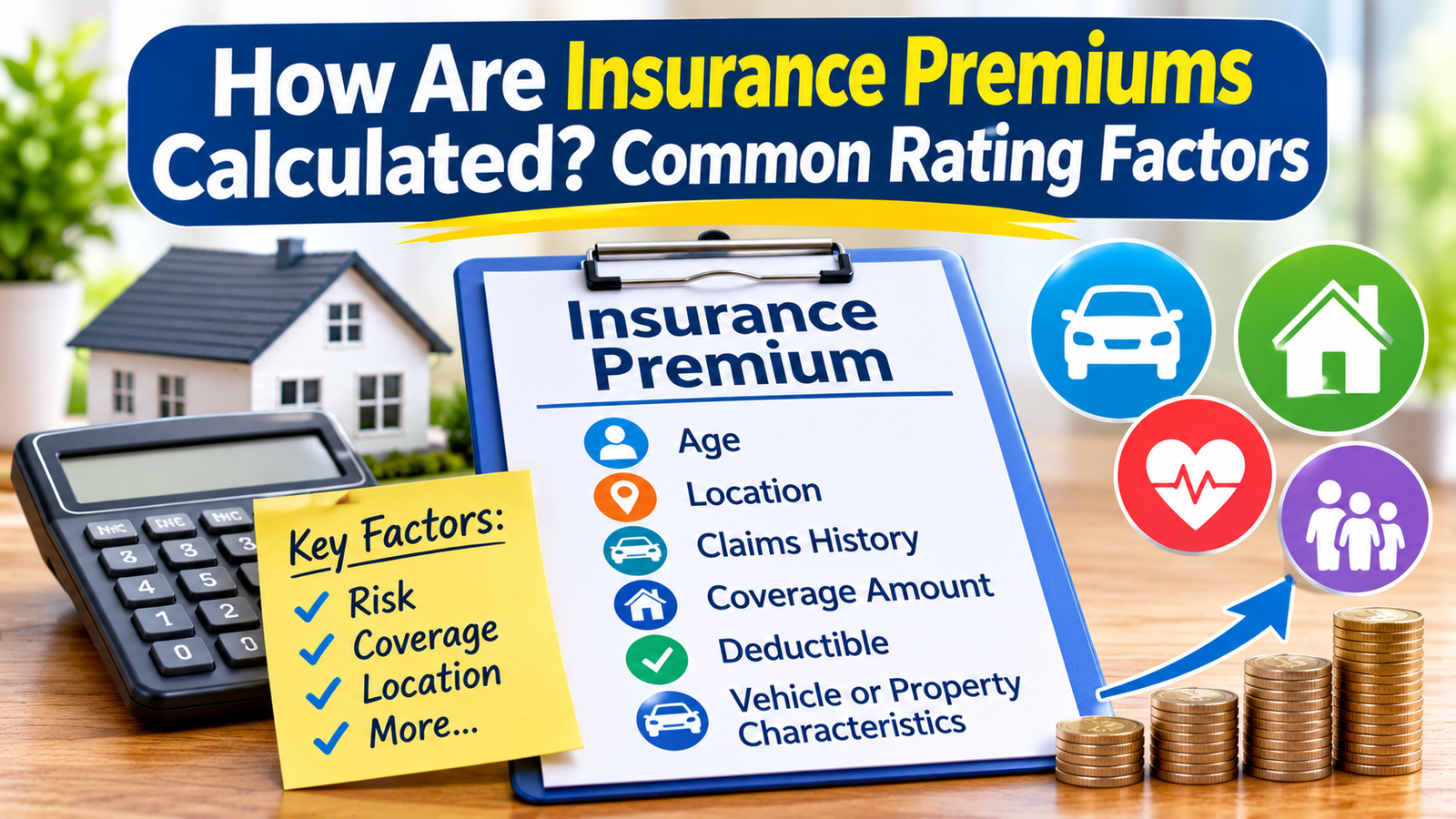
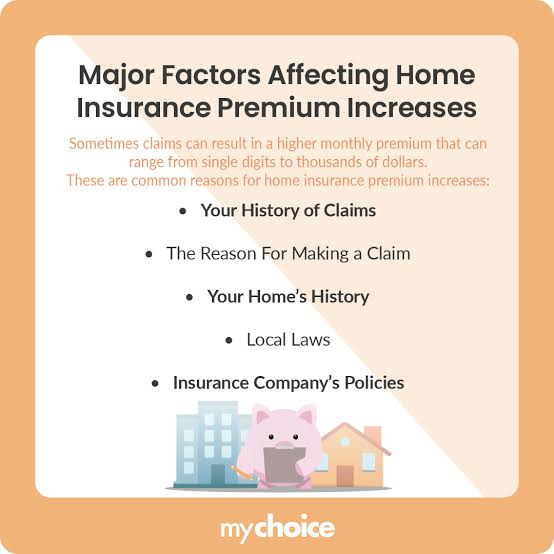
Insurance premiums are calculated by evaluating how much financial risk an insurance company may take on when providing coverage. Insurers use different rating factors, statistical information, policy details, and underwriting guidelines to estimate the potential cost of future claims. Common factors include age, location, claims history, coverage amount, deductible, property characteristics, and, for certain insurance types, driving or health-related information. The factors used depend on the kind of insurance being purchased and applicable state regulations. Understanding how insurance premiums are calculated can help consumers recognize why prices differ between policies and why two people with similar coverage may receive different premium amounts.
How Are Insurance Premiums Calculated? Common Rating Factors
1. What Is an Insurance Premium?
An insurance premium is the amount a policyholder pays to maintain insurance coverage. Depending on the contract, payments may be made monthly, quarterly, semiannually, or annually.
Premiums are based on the insurer’s estimate of potential claims costs, operating expenses, and other financial considerations. Insurance companies also consider the type and amount of protection being provided.
The premium is not the same as a deductible. A premium is the cost of maintaining the policy, while a deductible is the amount the policyholder may have to pay toward a covered claim.
How Do Insurers Estimate Risk?
Insurance companies use underwriting to evaluate the likelihood and potential cost of future claims.
They examine information about the applicant, insured property, selected coverage, and other relevant characteristics. Applicants with similar risk characteristics may be grouped into rating categories.
The insurer then applies its approved or filed rating methodology, where required by state law, to calculate the premium.
Underwriting vs. Rating
These two terms are closely related but have different purposes:
- Underwriting: Evaluates the risk and determines whether the insurer is willing to provide coverage under its guidelines.
- Rating: Determines the premium based on the risk characteristics and coverage selected.
In simple terms, underwriting evaluates the risk, while rating helps establish its price.
2. How Are Insurance Premiums Calculated?
Insurance companies do not generally use one universal formula for every type of insurance. Each company develops pricing methods based on the coverage offered, historical claims information, expected future losses, operating expenses, and applicable regulations.
A simplified pricing model may begin with a base rate and adjust it using different rating factors.
Understanding the Base Rate
A base rate is an initial pricing amount associated with a particular type of insurance and coverage category.
The insurer may adjust this amount according to factors such as location, age, claims history, property characteristics, and selected coverage options.
For example, an auto insurer may consider the vehicle’s model, driving history, annual mileage, and location when calculating an individual premium.
Understanding Rating Factors
Rating factors are characteristics used to adjust the base premium.
Some factors may increase the price, while others may qualify for credits or reductions under the insurer’s pricing rules.
A simplified formula looks like this:
Estimated Premium = Base Rate × Applicable Rating Factors + Other Applicable Charges
This is an educational illustration, not a universal insurance pricing formula. Actual calculations can involve several variables, statistical models, minimum premiums, fees, and regulatory requirements.
Why Do Insurance Companies Use Different Pricing Methods?
Insurance companies may evaluate similar risks differently because their underwriting guidelines, claims experience, business expenses, and pricing models are not identical.
State regulations also influence which factors insurers may use and how rates must be justified or approved.
As a result, two policies offering similar coverage may have different premiums even when the applicants have comparable circumstances.
3. Common Factors That Affect Insurance Premiums
The factors used to calculate insurance premiums depend on the type of coverage. Some apply to several insurance categories, while others are specific to auto, homeowners, life, or health insurance.
A. Age
Age can influence premiums for certain insurance products.
For auto insurance, younger and less experienced drivers may fall into rating categories associated with different accident risks. Older drivers may also be evaluated according to applicable underwriting rules and driving experience.
For life insurance, age is an important factor because the likelihood of death generally increases as people grow older.
Health insurance premiums can also be affected by age, subject to federal and state rules governing the particular coverage.
B. Location
Where someone lives can affect insurance costs because different areas have different patterns of claims and financial losses.
For example:
- Auto insurance may reflect traffic density, accident frequency, vehicle theft, and local repair costs.
- Homeowners insurance may reflect exposure to hurricanes, wildfires, windstorms, and other property risks.
- Renters insurance may consider local theft and property-loss patterns.
Location-related rating factors are subject to applicable state regulations.
C. Claims History
An applicant’s previous insurance claims may influence future premiums for certain types of coverage.
For example, a driver with a history of accidents or certain claims may be placed in a different auto insurance rating category than someone with a different claims history.
Homeowners insurers may also consider previous property claims when evaluating an application.
However, the impact depends on the insurance type, claim circumstances, company guidelines, and state law. Not every claim automatically results in a premium increase.
D. Driving Record
A driving record is an important rating factor in many auto insurance pricing systems.
Insurers may review information such as:
- Previous accidents
- Traffic violations
- Serious driving offenses
- Years of driving experience
- Driving-related claims
A record involving certain violations or accidents may indicate a higher expected risk of future claims.
The importance of each factor varies by insurer and state.
E. Credit-Based Insurance Score
Some auto and homeowners insurers use credit-based insurance scores where permitted by state law.
A credit-based insurance score uses selected information from a consumer’s credit history to help estimate the likelihood of an insurance loss.
It is different from a traditional credit score used by lenders to evaluate borrowing and repayment risk.
Not all states allow this practice, and the rules governing its use differ. It is also generally not the same as a factor used to calculate life insurance premiums.
F. Coverage Amount and Policy Limits
The amount of insurance protection selected can affect the premium.
For example, a homeowners policy with a higher dwelling coverage limit may cost more because the insurer could face a larger potential payment following a covered loss.
Similarly, higher auto liability limits or additional optional coverages may affect the policy’s price.
The relationship between coverage and premium depends on the policy structure and insurer’s pricing method.
G. Deductibles
A deductible is the amount the policyholder is responsible for paying toward an eligible covered claim.
In many property and auto insurance policies, selecting a higher deductible may reduce the premium because the policyholder agrees to take responsibility for a larger portion of certain losses.
However, deductibles do not work identically across all insurance products. Health insurance, for example, has its own cost-sharing structure.
H. Property and Vehicle Characteristics
Insurers may evaluate the physical characteristics of the property or vehicle being insured.
For homeowners insurance, these may include:
- Age and condition of the building
- Construction materials
- Roof type and condition
- Square footage
- Replacement cost
- Fire protection and safety features
For auto insurance, relevant characteristics may include the vehicle’s make, model, age, repair costs, safety features, and likelihood of theft.
These details can influence the expected severity or frequency of covered claims.
4. How Premiums Differ Across Types of Insurance
Although the basic idea of risk-based pricing applies to many insurance products, the factors used can vary considerably.
Auto Insurance Premiums
Auto insurance premiums are influenced by the likelihood of accidents, vehicle damage, theft, and liability claims.
Common factors include:
- Driving history and experience
- Age and, where legally permitted, other personal characteristics
- Vehicle make, model, and repair costs
- Annual mileage and vehicle usage
- Garaging location
- Selected coverage limits and deductibles
- Claims history
Some insurers also use telematics programs that collect driving information, such as braking patterns, acceleration, and mileage, subject to applicable rules and program terms.
Homeowners Insurance Premiums
Homeowners insurance pricing generally considers the potential cost of repairing or rebuilding a home and replacing eligible belongings after a covered event.
Common factors include:
- Home location and local weather exposure
- Building materials and construction type
- Age and condition of the property
- Roof condition and age
- Replacement cost of the home
- Previous insurance claims
- Deductibles and selected coverage limits
- Available protective features, such as security systems or fire sprinklers
A home’s market value is not necessarily the same as its replacement cost. Replacement cost focuses on the estimated expense of rebuilding the structure rather than its real estate market price.
Life Insurance Premiums
Life insurance premiums are generally influenced by the expected likelihood of the insured person’s death during the coverage period and the financial obligation assumed by the insurer.
Factors may include:
- Age
- Health history and current health information
- Tobacco or nicotine use
- Medical underwriting results
- Policy type and coverage amount
- Length of coverage for term life insurance
- Optional policy features
Term life and permanent life insurance have different pricing structures. Permanent policies may include cash value features, which can affect their costs and complexity.
Health Insurance Premiums
Health insurance premiums follow different rules from many other insurance products.
For individual and family coverage under the Affordable Care Act (ACA), insurers generally cannot vary premiums based on an applicant’s medical history or health status.
Permitted rating factors generally include:
- Age, within federal and applicable state limits
- Geographic location
- Family composition
- Tobacco use, where permitted
- The plan’s coverage category and benefit design
Employer-sponsored coverage and other health insurance arrangements may follow different rules. Consumers should consult official federal and state resources for the requirements applicable to their coverage.
5. Hypothetical Examples: How Rating Factors Affect Premiums
The following examples demonstrate how insurers may use rating factors when estimating premiums. They are hypothetical and illustrative only. They do not represent actual insurance quotes, guaranteed savings, or the pricing methods of a particular company.
Example 1: Auto Insurance Premium Calculation
Imagine an auto insurer establishes a hypothetical base premium of $1,000 for a particular coverage category.
The insurer applies a rating factor of 1.20 based on the driver’s applicable risk classification.
The simplified calculation would be:
- Base premium: $1,000
- Rating factor: 1.20
- Adjusted premium: $1,200
This example shows how a rating factor greater than 1.00 can increase a base premium. In actual pricing systems, multiple factors may apply, and the insurer may use a different calculation method.
Example 2: Homeowners Insurance and Property Characteristics
Imagine two homes have similar coverage limits, but one is located in an area with greater exposure to severe windstorms.
The insurer’s approved rating methodology may assign different location-related factors to the two properties.
The home with greater expected exposure to covered storm losses may receive a higher premium, depending on the insurer’s claims data, property characteristics, mitigation features, and applicable regulations.
This example illustrates how location can influence property insurance pricing even when two homes have similar coverage.
6. Why Do Insurance Premiums Increase or Decrease?
Insurance premiums can change over time, even when a policyholder has not filed a claim or made significant changes to a policy.
This happens because insurance pricing reflects both individual risk factors and broader economic and insurance-market conditions.
Changes in Individual Circumstances
A premium may change when certain personal or property details change.
Examples include:
- A new vehicle or change in vehicle usage
- A change of address
- A new driver being added to an auto policy
- Changes in home condition or replacement cost
- Changes in selected coverage limits or deductibles
- Updated underwriting information
The effect depends on the policy and the insurer’s rating rules.
Inflation and Repair Costs
Inflation can affect insurance premiums because the cost of paying claims may increase.
For example, higher prices for construction materials, vehicle parts, labor, medical services, and replacement products can increase the amount insurers expect to pay for certain claims.
Even when the likelihood of an accident or property loss remains similar, the financial cost of repairing the damage may be greater.
Weather Events and Catastrophe Losses
Severe weather events can produce substantial insurance losses.
Hurricanes, wildfires, hailstorms, floods, and other disasters may increase the cost of insuring properties in exposed areas.
Insurers also consider reinsurance costs, which are expenses associated with transferring some of their own financial risk to other insurance organizations.
These broader factors may influence rates across groups of policyholders rather than just individuals who have filed claims.
7. How Insurance Rates Are Regulated and What Consumers Should Understand
Insurance companies do not have unlimited freedom to set premiums however they choose.
In the United States, state insurance departments generally regulate many insurance rates and underwriting practices. However, the specific rules and approval processes vary by state and insurance category.
The Role of State Insurance Departments
State regulators oversee insurance companies and review rate filings according to applicable laws.
Depending on the state and type of insurance, regulators may review whether proposed rates are:
- Adequate to support expected claims and expenses
- Not excessive
- Not unfairly discriminatory
- Supported by appropriate actuarial information
Some states require prior approval of certain rates, while others use different filing and review systems.
What Consumers Can Do to Understand Their Premiums
Policyholders can take several practical steps to understand how their insurance prices are determined:
- Review policy documents: Check coverage limits, deductibles, exclusions, and listed policy details.
- Verify personal information: Make sure the information provided to the insurer is accurate.
- Ask about rating factors: Request an explanation of the main factors affecting the premium.
- Check available discounts: Ask whether any applicable discounts or credits are reflected in the policy.
- Review renewal notices: Compare changes in premiums and coverage from one policy period to another.
- Contact state regulators: Consult the state Department of Insurance if there are concerns about rating practices or compliance with insurance laws.
Consumers should compare the actual coverage terms and exclusions when reviewing insurance prices. A lower premium does not necessarily mean two policies provide equivalent protection.
Key Takeaways
- Insurance premiums are based on expected claims costs, risk characteristics, coverage choices, and other financial factors.
- Common rating factors include age, location, claims history, driving record, property characteristics, deductibles, and coverage limits.
- Auto, homeowners, life, and health insurance use different pricing rules.
- Inflation, repair costs, severe weather, and reinsurance expenses can influence premiums over time.
- State insurance departments regulate many insurance pricing practices, but rules differ across states and insurance types.
Frequently Asked Questions (FAQs)
1. What is the biggest factor affecting insurance premiums?
There is no single biggest factor across all insurance types. Auto premiums may be strongly influenced by driving history, vehicle details, and location, while homeowners premiums often reflect property characteristics and exposure to natural disasters. Life insurance commonly considers age and health-related underwriting information. The importance of each factor depends on the policy and insurer.
2. Does a higher deductible lower an insurance premium?
A higher deductible may reduce the premium for certain auto and property insurance policies because the policyholder accepts more responsibility for eligible losses. However, this relationship is not identical across all insurance products. Consumers should understand the deductible they would have to pay after a covered claim before evaluating its effect on the premium.
3. Why do insurance premiums increase without filing a claim?
Premiums can increase even when a policyholder has not submitted a claim. Insurers may adjust rates because of inflation, higher repair and replacement costs, severe weather losses, reinsurance expenses, or changes in regional risk. Individual circumstances, underwriting updates, and regulatory-approved rate changes can also affect renewal prices.
4. Does credit history affect insurance premiums?
Some auto and homeowners insurers use credit-based insurance scores where state law permits. These scores use selected credit-history information to help estimate insurance loss risk. They are different from traditional lending credit scores. Certain states restrict or prohibit their use, and they are not universally applied to every type of insurance.
5. Can two people pay different premiums for the same coverage?
Yes. Two people with apparently similar policies may receive different premiums because insurers consider several rating factors, including location, claims history, age, property or vehicle characteristics, and underwriting classifications. Different insurers may also use different approved pricing methods. Similar coverage does not necessarily mean identical risk or pricing.
Conclusion
Understanding how insurance premiums are calculated helps explain why insurance prices differ between individuals, properties, and coverage types. Insurers evaluate expected claims costs using rating factors such as location, age, claims history, property characteristics, and selected coverage options. Broader economic conditions and state regulations also influence pricing. Although some factors are outside a consumer’s control, reviewing policy information and understanding available rating explanations can make insurance costs easier to evaluate. Ultimately, premiums reflect a combination of risk assessment, coverage design, insurer pricing methods, and applicable regulations.
Sources and Further Reading
The following US organizations provide educational information about insurance premiums, rating factors, underwriting, and consumer protection.
1. National Association of Insurance Commissioners (NAIC): Explains how insurance companies use rating factors and credit-based insurance scores when evaluating certain policies.
https://content.naic.org/insurance-topics/credit-based-insurance-scores
2. NAIC – Why Are My Insurance Premiums Increasing?: Discusses common auto and homeowners insurance rating factors and reasons premiums may change.
https://content.naic.org/article/why-are-my-insurance-premiums-increasing
3. Texas Department of Insurance: Explains how location, claims history, vehicle characteristics, home replacement costs, and other factors affect insurance prices.
https://www.tdi.texas.gov/consumer/how-are-your-auto-and-homeowners-insurance-costs-calculated.html
4. Government Accountability Office (GAO): Provides research on homeowners insurance premiums, rating factors, disaster exposure, and state rate regulation.
https://www.gao.gov/products/gao-26-107867
5. Your State Department of Insurance: Provides state-specific information about insurance rate regulation, consumer protections, and permitted rating practices.
https://content.naic.org/state-insurance-departments
6. HealthCare.gov: Explains the factors that can affect health insurance premiums under the Affordable Care Act.
https://www.healthcare.gov/how-plans-set-your-premiums/
Disclaimer
This article is provided for educational purposes only and does not constitute insurance, financial, tax, medical, or legal advice. No guarantees or promises are made regarding coverage, claim approval, savings, premiums, or any other results. All examples are hypothetical and included for illustration only. This article does not state time-sensitive figures such as premiums, deductibles, coverage limits, or enrollment dates; readers should check official sources such as HealthCare.gov, Medicare.gov, the NAIC, or their state Department of Insurance for current information. Consult a licensed insurance professional or qualified advisor before making insurance decisions.
About the Author
[Author Name] is [credentials/experience in insurance, finance, writing, or research]. [One or two sentences about expertise.] The author specializes in creating accessible educational content that helps readers understand insurance, risk management, and personal finance concepts.
SEO Metadata
Meta title
50 characters
Under 60
How Are Insurance Premiums Calculated? Key Factors
Meta description
143 characters
Under 155
Learn how insurance premiums are calculated and how age, location, claims history, coverage, and other rating factors affect costs.
Suggested URL slug
how-are-insurance-premiums-calculated
5 Related Keywords
- Insurance premium calculation
- Insurance rating factors
- Factors affecting insurance premiums
- How insurance companies calculate rates
- Insurance underwriting explained
Editorial quality check: The article explains underwriting and rating, covers common factors across major US insurance types, includes two hypothetical examples, and distinguishes credit-based insurance scores from traditional credit scores. It avoids fixed premium figures and guaranteed savings claims. The disclaimer is placed after sources and before the final author bio.
Sources: NAIC guidance on rating and credit-based insurance scores, Texas Department of Insurance, and GAO research. NAIC+3