1. What Is Medicare and Who Is Eligible?
Medicare is a federal health insurance program administered by the Centers for Medicare & Medicaid Services (CMS). It helps eligible people pay for certain hospital services, medical care, and prescription drugs. Although many people become eligible when they turn 65, Medicare is not limited to older adults.
People under 65 may qualify after receiving Social Security disability benefits for a qualifying period or because they have certain conditions, including amyotrophic lateral sclerosis (ALS) or end-stage renal disease (ESRD). Eligibility and enrollment requirements depend on the person’s circumstances, work history, and applicable federal rules.
Medicare is different from Medicaid. Medicare is primarily based on age or qualifying disability or medical conditions. Medicaid is a joint federal and state program that provides health coverage to eligible people based on financial and other state-specific requirements. Some people qualify for both programs.
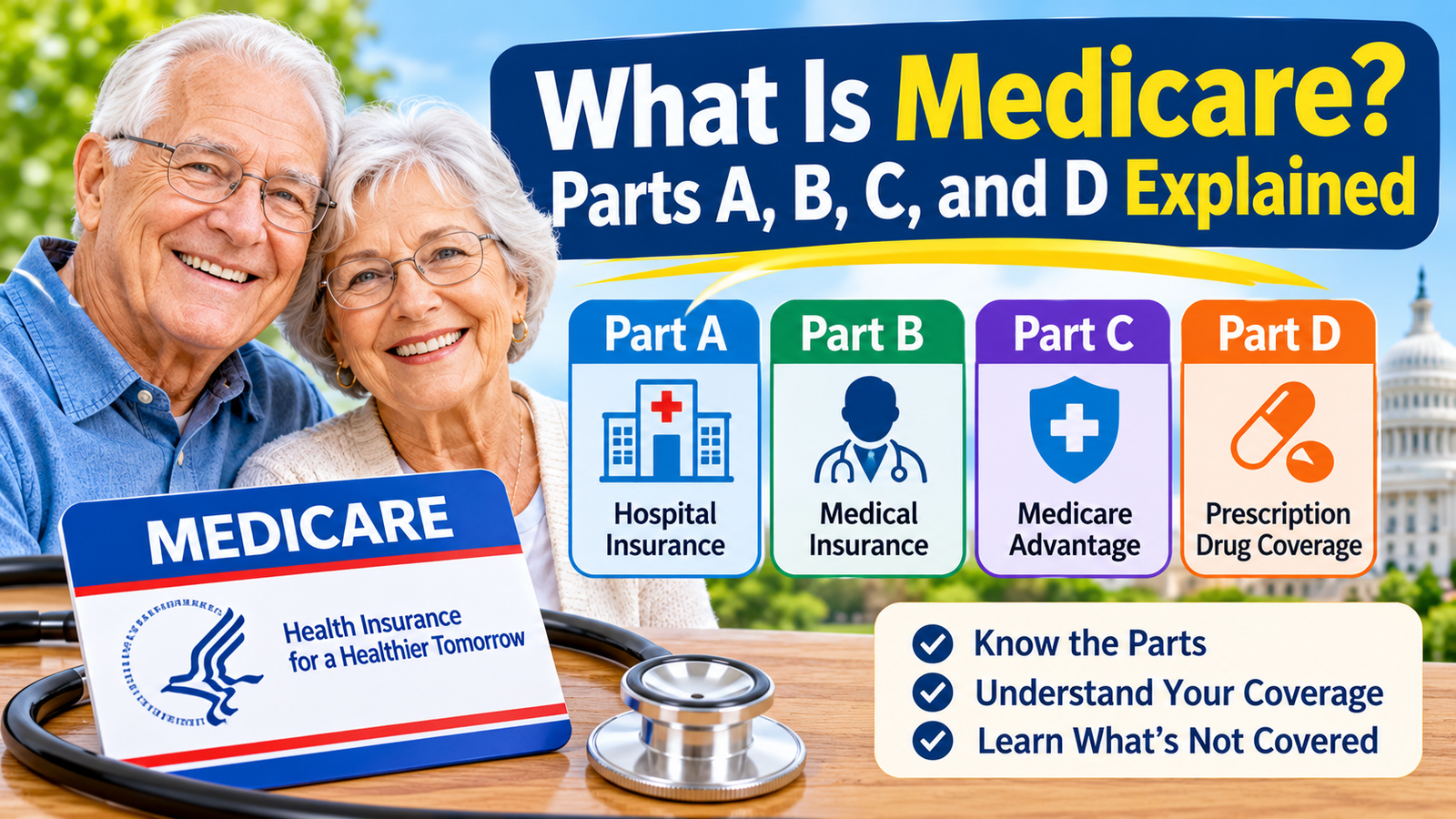
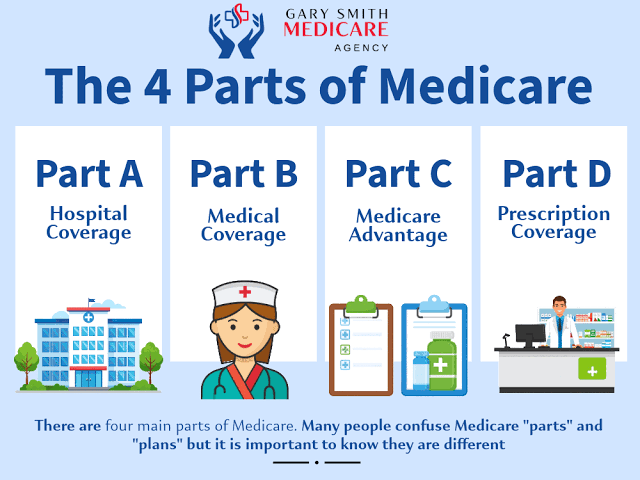
Medicare has four main parts, each with a different role. Parts A and B make up Original Medicare. Part C, also called Medicare Advantage, is another way to receive Medicare-covered benefits. Part D provides prescription drug coverage.
2. Medicare Part A: Hospital Insurance
Medicare Part A is commonly called hospital insurance. It helps cover certain types of inpatient and facility-based care when the person meets Medicare’s coverage requirements.
Part A generally helps cover:
- Inpatient hospital care: Qualifying care received after a hospital formally admits someone as an inpatient. The hospital’s classification of the stay matters; spending the night in a hospital does not automatically mean the person has inpatient status.
- Skilled nursing facility care: Limited skilled nursing or rehabilitation services in a qualifying facility when Medicare’s conditions are met. This is not the same as ongoing assistance with everyday activities.
- Hospice care: Certain services for people who meet Medicare’s hospice eligibility requirements and choose hospice care.
- Some home health care: Qualifying part-time or intermittent skilled services and related covered care at home.
Part A does not cover every service provided in a hospital or care facility. For example, long-term custodial care—such as ongoing help with bathing, dressing, or eating when skilled care is not needed—is generally not covered by Medicare.
Many people qualify for premium-free Part A based on their own or a spouse’s Medicare-covered work history. Others may have to pay a premium. Even when Part A has no monthly premium, deductibles, coinsurance, or other cost-sharing requirements may apply.
Why inpatient status matters: A person receiving hospital care may be classified as an inpatient or as an outpatient under observation. That classification can affect which Medicare benefits apply, including eligibility for certain skilled nursing facility coverage. Patients or family members can ask the hospital whether the stay is formally inpatient or observation status.
3. Medicare Part B: Medical Insurance
Medicare Part B is medical insurance. It generally helps pay for medically necessary services and preventive care that do not fall under Part A’s hospital coverage.
Part B commonly helps cover:
- Doctor visits and services from other health care professionals.
- Outpatient hospital services and certain procedures.
- Laboratory tests, imaging, and other diagnostic services when covered.
- Preventive services, including eligible screenings, vaccines, and wellness visits.
- Durable medical equipment, such as walkers, wheelchairs, and certain hospital beds.
- Some home health services and outpatient rehabilitation.
Part B is important because many healthcare interactions do not involve an overnight hospital admission. Routine visits with doctors, specialist consultations, and many tests are generally associated with medical or outpatient coverage rather than inpatient hospital insurance.
Most people pay a monthly Part B premium. They may also have to meet a deductible and pay coinsurance or other cost-sharing amounts for covered services. The amount a person pays can depend on income, the service received, and Medicare’s coverage rules.
Part B does not cover every type of healthcare. Routine dental care, most routine eye examinations for glasses, hearing aids, and long-term custodial care are examples of services that Original Medicare generally does not cover, although specific exceptions and other coverage arrangements may exist.
4. Medicare Part C: Medicare Advantage
Medicare Part C is also known as Medicare Advantage. It is an alternative to receiving Medicare benefits through Original Medicare. Medicare Advantage plans are offered by private companies approved by Medicare and must provide the Medicare-covered Part A and Part B benefits, subject to program rules.
Most Medicare Advantage plans also include prescription drug coverage, although plan arrangements vary. Some plans offer additional benefits, such as certain dental, vision, hearing, or wellness services. The availability and scope of these benefits depend on the specific plan.
Medicare Advantage plans may use provider networks. Depending on the plan type, members may need to use network doctors, hospitals, or other providers for certain services to receive the plan’s preferred coverage. Some services or treatments may also require prior authorization.
These plans can have different cost-sharing arrangements from Original Medicare. Medicare Advantage plans generally have an annual limit on out-of-pocket costs for covered Part A and Part B services. That limit does not necessarily include premiums, prescription drug costs, or services that are not covered.
How Medicare Advantage differs from Original Medicare
Original Medicare allows beneficiaries to receive covered care from any doctor or hospital that accepts Medicare, subject to Medicare rules. People with Original Medicare can generally add a separate Part D prescription drug plan and may be able to buy a Medigap policy to help with certain out-of-pocket costs.
With Medicare Advantage, the private plan administers the person’s Part A and Part B benefits. Many plans combine medical and drug coverage, but networks, referrals, prior authorization, and cost-sharing rules can differ.
A person generally cannot use a Medigap policy to pay Medicare Advantage plan costs. Medigap is designed to supplement Original Medicare, not Medicare Advantage.
5. Medicare Part D: Prescription Drug Coverage
Medicare Part D helps cover prescription medications. It is available through private insurance companies that contract with Medicare and follow federal program requirements.
A person with Original Medicare can generally get Part D by joining a separate Medicare drug plan. Many Medicare Advantage plans include prescription drug coverage, often described as Medicare Advantage Prescription Drug plans. Not every Medicare Advantage plan includes drug coverage, so plan details matter.
Part D plans have lists of covered medications called formularies. A formulary identifies which drugs a plan covers and may organize them into cost-sharing levels called tiers. A plan may also have rules such as prior authorization, step therapy, or quantity limits for certain prescriptions.
A drug’s coverage and out-of-pocket cost can depend on the plan’s formulary, pharmacy arrangements, and applicable program rules. A medication being prescribed by a doctor does not automatically mean every Part D plan will cover it.
Part D is separate from Part B, although some medications administered in a medical setting may be covered under Part B instead. Which part applies depends on the medication, how it is administered, and Medicare’s coverage rules.
6. Original Medicare vs. Medicare Advantage: How the Parts Fit Together
The four parts can be easier to understand when viewed as two main ways of receiving Medicare health coverage.
Original Medicare consists of Part A and Part B. A person can usually add a standalone Part D plan for prescription drugs. They may also have other coverage, such as employer or retiree coverage, Medicaid, or a Medigap policy if eligible.
Medicare Advantage is Part C. Instead of receiving Part A and Part B benefits directly through Original Medicare, the person receives those benefits through a Medicare-approved private plan. Most Medicare Advantage plans include Part D, but not all do.
| Medicare component | Main purpose | How it generally works |
|---|---|---|
| Part A | Hospital insurance | Helps cover qualifying inpatient and facility-based care |
| Part B | Medical insurance | Helps cover doctor services, outpatient care, and preventive services |
| Part C | Medicare Advantage | Provides Part A and Part B benefits through a Medicare-approved private plan |
| Part D | Prescription drug coverage | Helps cover eligible prescription medications |
Hypothetical example 1: Using Original Medicare
Imagine a retired person has Original Medicare and a separate Part D plan. They receive a covered outpatient consultation with a doctor and later have a qualifying inpatient hospital admission. Part B generally applies to the outpatient consultation, while Part A generally applies to the qualifying inpatient hospital care. Their Part D plan may help cover eligible prescriptions they fill at a pharmacy.
This example is illustrative only. Actual coverage and costs depend on the services, provider, plan terms, and Medicare rules.
Hypothetical example 2: Using Medicare Advantage
Imagine another person receives Medicare benefits through a Medicare Advantage plan that includes prescription drug coverage. They schedule a specialist appointment and need a diagnostic test. The plan’s network and prior authorization rules may affect how the services are arranged and covered. The plan may also have cost-sharing rules and an annual out-of-pocket limit for covered Part A and Part B services.
This example is illustrative only. Medicare Advantage benefits, provider networks, and cost-sharing vary by plan and location.
7. What Medicare Does Not Cover and What to Understand Before Enrolling
Medicare provides important health coverage, but it does not pay for every healthcare expense. Original Medicare generally does not cover most long-term custodial care, routine dental care, routine eye examinations for eyeglasses, hearing aids, or routine examinations for fitting hearing aids. Certain services may be covered in specific circumstances, and other coverage arrangements may provide benefits that Original Medicare does not.
Medicare also involves cost-sharing. Depending on the coverage, a person may pay premiums, deductibles, copayments, or coinsurance. Having Medicare does not automatically mean every service is free.
Enrollment is another important consideration. Many people first become eligible around age 65, but the correct enrollment path can depend on whether they receive Social Security benefits, have qualifying employer health coverage, or qualify through disability or a medical condition. Delaying enrollment in certain circumstances can lead to coverage gaps or late enrollment penalties. Rules and exceptions vary, so people should confirm how their own circumstances affect enrollment.
People generally enroll in Parts A and B through Social Security. Medicare plan choices, including Medicare Advantage and Part D, are handled through Medicare’s enrollment process. The available choices and enrollment periods can depend on eligibility and individual circumstances.
Key Takeaways
- Medicare is a federal health insurance program for people 65 and older and certain younger people who qualify through disability or specific medical conditions.
- Part A helps cover qualifying inpatient hospital care, skilled nursing facility care, hospice, and some home health services.
- Part B helps cover doctor services, outpatient care, preventive services, and certain medical equipment.
- Part C, or Medicare Advantage, provides Part A and Part B benefits through Medicare-approved private plans; most include Part D drug coverage.
- Part D helps cover prescription drugs, but covered medications and plan rules vary.
Frequently Asked Questions About Medicare
1. What is the difference between Medicare and Medicaid?
Medicare is a federal health insurance program primarily for people age 65 and older and certain younger people who qualify through disability or specific medical conditions. Medicaid is a joint federal and state program for people who meet financial and other eligibility requirements. The programs have different rules and coverage structures. Some people qualify for both Medicare and Medicaid, and Medicaid may help with certain Medicare-related costs.
2. Are Medicare Parts A and B free?
Not necessarily. Many people qualify for Part A without a monthly premium because of their own or a spouse’s work history and Medicare tax contributions. Others may have to pay for Part A. Most people pay a monthly premium for Part B. Deductibles, coinsurance, and other cost-sharing may also apply. Current costs depend on federal rules and individual circumstances.
3. Is Medicare Part C the same as Medicare Advantage?
Yes. Medicare Part C is the official name for Medicare Advantage. These plans are offered by private companies approved by Medicare and provide Part A and Part B benefits through the plan. Most also include prescription drug coverage. Networks, covered extra benefits, prior authorization requirements, and out-of-pocket costs vary, so the details of each plan are important.
4. Does Medicare automatically include prescription drug coverage?
No. Original Medicare does not generally include outpatient prescription drug coverage. People with Original Medicare can join a separate Medicare Part D drug plan. Many Medicare Advantage plans include Part D, but some do not. Coverage depends on the plan’s formulary and rules. Certain drugs administered in a medical setting may be covered under Part B instead of Part D.
5. Does Medicare cover long-term nursing home care?
Medicare generally does not pay for long-term custodial nursing home care when a person mainly needs help with everyday activities such as bathing, dressing, or eating. It may cover qualifying skilled nursing facility care for a limited period when specific conditions are met. The distinction between skilled care and custodial care is important, and coverage depends on Medicare’s requirements.
Conclusion
Medicare is a federal health insurance program with several parts that serve different purposes. Part A helps cover qualifying hospital and facility-based care, while Part B helps cover medical services and outpatient care. Part C offers Medicare Advantage as an alternative way to receive Part A and Part B benefits, and Part D helps cover prescription drugs. Understanding these distinctions can make Medicare’s structure easier to follow, but coverage, costs, and enrollment rules depend on individual circumstances. Official Medicare and Social Security resources provide current information about eligibility, benefits, and enrollment.
Sources and Further Reading
The following official US resources provide additional information about Medicare eligibility, coverage, enrollment, and program rules:
- Medicare.gov — Parts of Medicare: https://www.medicare.gov/basics/get-started-with-medicare/medicare-basics/parts-of-medicare
- Medicare.gov — Your Coverage Options: https://www.medicare.gov/basics/get-started-with-medicare/get-more-coverage/your-coverage-options
- Medicare.gov — What Original Medicare Covers: https://www.medicare.gov/providers-services/original-medicare
- Medicare.gov — Medigap Basics: https://www.medicare.gov/health-drug-plans/medigap/basics
- Centers for Medicare & Medicaid Services (CMS): https://www.cms.gov/about-cms/what-we-do/medicare
- Social Security Administration — Medicare: https://www.ssa.gov/medicare
Disclaimer
This article is for educational purposes only and is not insurance, financial, tax, medical, or legal advice. No guarantees or promises are made about coverage, claim approval, savings, premiums, or any other results. All examples are hypothetical and provided for illustration only. This article does not state time-sensitive figures such as premiums, deductibles, coverage limits, or enrollment dates; readers should check official sources such as Medicare.gov, the Social Security Administration, CMS, or other relevant government resources for current information. Consult a licensed insurance professional or another qualified advisor before making insurance decisions.
About the Author: [Author Name] is [credentials/experience in insurance, finance, writing, or research]. [One or two sentences about expertise.]