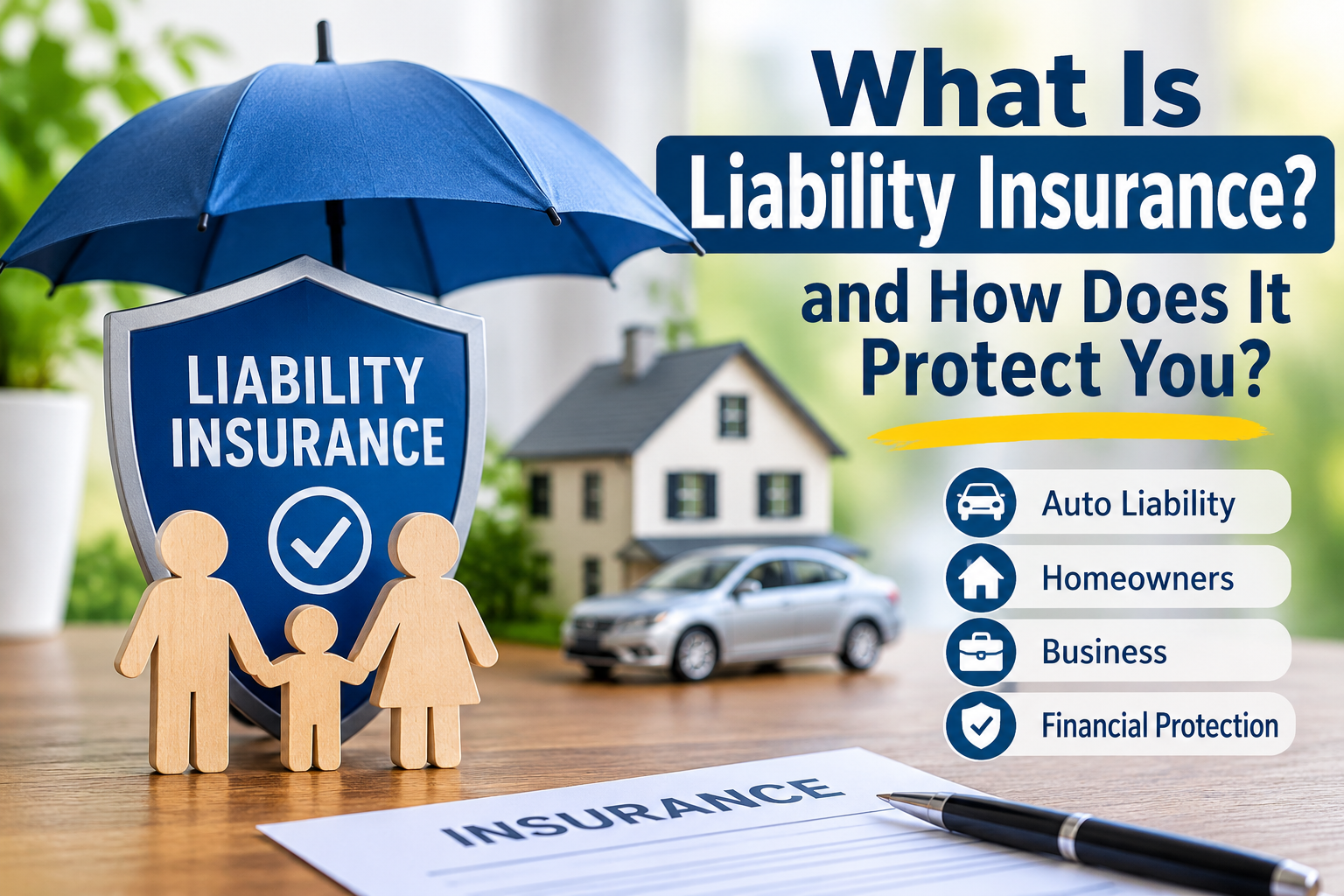
Liability insurance is a type of insurance that helps protect individuals and businesses from financial losses when they are held legally responsible for injuring someone or damaging another person’s property. Depending on the policy, it may cover compensation owed to an injured party, property repairs, and legal defense expenses. Liability insurance is commonly included in auto, homeowners, and renters insurance, while businesses can purchase separate liability policies. It plays an important role in financial protection because accidents, injuries, and property damage can sometimes result in expensive claims or lawsuits. Understanding how liability insurance works, what it covers, and where its limitations apply can help people make more informed decisions about their insurance needs.
1. What Is Liability Insurance?
Liability insurance is financial protection against certain claims that arise when a person or business is legally responsible for harm caused to another person or their property.
Unlike insurance that primarily protects your own belongings, liability insurance focuses on your responsibility toward others. For example, if you accidentally damage a neighbor’s property or cause an automobile accident that injures another driver, you could face a financial claim.
A liability insurance policy generally helps cover eligible claims according to its terms and coverage limits. It may also provide legal representation when a covered claim results in a lawsuit.
Liability coverage is commonly found in several types of insurance:
- Auto liability insurance: Helps pay for injuries and property damage you cause to others in a covered vehicle accident.
- Homeowners liability insurance: May cover certain injuries or property damage involving your household for which you are legally responsible.
- Renters liability insurance: Provides personal liability protection under covered circumstances, even though the policyholder does not own the rental property.
- Business general liability insurance: Helps protect businesses against certain claims involving customer injuries, property damage, and other covered liabilities.
- Professional liability insurance: May cover claims alleging professional negligence, errors, or omissions, depending on the profession and policy.
The specific protection depends on the insurance contract, applicable state laws, exclusions, and coverage limits.
2. How Does Liability Insurance Work?
Liability insurance generally works by transferring certain financial risks from the policyholder to an insurance company in exchange for a premium.
When an accident or incident occurs, someone who believes they suffered harm may submit a claim against the person or business they consider responsible.
The insurance company reviews the circumstances and determines whether the incident falls within the policy’s coverage.
The process generally involves these steps:
- An incident occurs: Someone suffers an injury or property damage in an accident or other covered situation.
- A claim is reported: The affected person submits a claim, or the policyholder reports the incident to the insurance company.
- The insurer investigates: The company reviews available evidence, policy language, and relevant circumstances to evaluate responsibility and coverage.
- The claim is evaluated: The insurer determines whether the policy applies and what expenses may be covered.
- Payment or defense follows: If the claim is covered, the insurer may pay eligible damages, arrange legal defense, or negotiate a settlement according to the contract.
Liability policies often include a legal defense provision. This means the insurer may appoint an attorney and handle covered legal proceedings when a lawsuit falls within the policy’s terms.
However, coverage is not automatic simply because someone files a claim. The insurer must evaluate the facts and applicable policy provisions.
3. What Does Liability Insurance Cover?
Liability insurance can cover different types of financial responsibilities depending on the policy. Three common areas of protection are bodily injury, property damage, and legal defense expenses.
Bodily Injury Liability
Bodily injury liability coverage helps pay eligible expenses when another person is physically injured in an incident for which the insured is legally responsible.
Depending on the policy and circumstances, covered damages may include:
- Medical expenses.
- Rehabilitation costs.
- Lost income resulting from an injury.
- Certain other legally recoverable damages.
For example, auto liability insurance may apply when a driver causes an accident that injures someone in another vehicle.
Property Damage Liability
Property damage liability coverage helps pay for damage to someone else’s property when the insured is legally responsible for the damage.
Common examples include:
- Damaging another person’s vehicle in a car accident.
- Hitting a fence or building while driving.
- Accidentally damaging a neighbor’s property in a covered incident.
- Causing covered property damage during business operations.
The policy determines which types of property damage qualify for coverage.
Legal Defense Expenses
A lawsuit can create legal expenses even when the policyholder believes the claim is unfair or inaccurate.
Some liability policies provide legal defense for covered claims, including attorney fees and certain court-related expenses.
The insurer’s responsibility to provide a defense depends on the contract and applicable law. Defense expenses may be handled differently depending on the policy, including whether they count toward the liability limit.
4. Common Types of Liability Insurance
Liability insurance is not a single policy. Different forms of coverage address different situations and risks.
Auto Liability Insurance
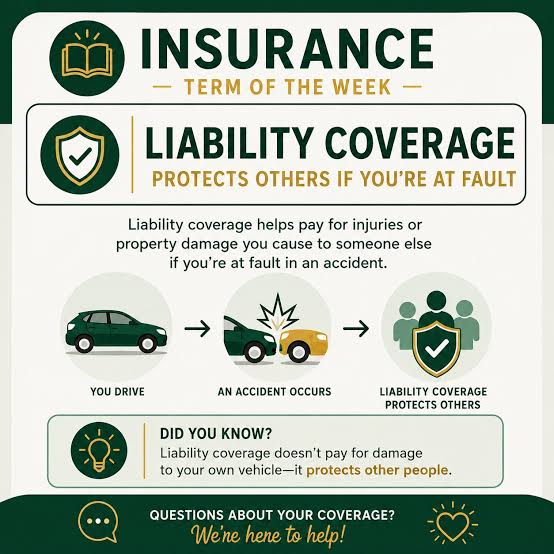
Auto liability insurance helps protect drivers financially when they cause injuries or property damage to other people in covered vehicle accidents.
It generally includes:
- Bodily injury liability.
- Property damage liability.
Most US states require drivers to maintain some form of financial responsibility, commonly through auto liability insurance. However, requirements and available alternatives vary by state.
Auto liability coverage generally pays for other people’s eligible losses rather than repairs to the policyholder’s own vehicle. Collision and comprehensive coverage address different types of vehicle damage.
Homeowners and Renters Liability Insurance
Homeowners insurance commonly includes personal liability protection for certain accidents involving injuries to other people or damage to their property.
For instance, a homeowner may face a liability claim if a visitor is injured in a covered accident on the property and the homeowner is legally responsible.
Renters insurance can also include personal liability coverage. This protection may apply to covered incidents involving the policyholder, household members, or certain activities away from the rental home, depending on the contract.
Business General Liability Insurance
Businesses can face liability claims involving customers, visitors, products, and everyday operations.
Commercial general liability insurance, often called CGL insurance, commonly addresses covered claims involving:
- Bodily injuries to third parties.
- Damage to another person’s property.
- Certain personal and advertising injuries, such as specified libel or slander claims.
For example, a customer who slips and falls inside a store may make a claim against the business.
General liability insurance does not cover every business-related risk. Employee injuries, professional mistakes, and certain vehicle-related claims generally require separate or specialized coverage.
Professional Liability Insurance
Professional liability insurance addresses certain claims arising from professional services.
It is sometimes called errors and omissions (E&O) insurance. Certain professions may also use the term malpractice insurance.
For example, a client might claim that an accountant made a professional error that caused financial harm. A covered professional liability policy may help address the resulting claim.
Coverage depends on the professional service, policy wording, and applicable exclusions.
5. Hypothetical Examples of How Liability Insurance Protects You
The following examples are hypothetical and illustrative only. Actual claim payments depend on the policy, circumstances, applicable laws, and insurer’s coverage determination.
Example 1: Auto Liability Insurance
Imagine a driver accidentally causes a car accident. Another motorist suffers injuries and their vehicle requires repairs.
The injured motorist submits a claim for $15,000 in eligible bodily injury damages and $5,000 in vehicle damage.
If the responsible driver has applicable auto liability coverage and the claim falls within the policy’s limits, the insurer may pay the covered damages.
Without applicable liability protection, the responsible driver could face significant out-of-pocket expenses and potential legal claims.
Example 2: Homeowners Liability Insurance
Imagine a homeowner has personal liability insurance. A visitor slips on an unsafe walkway and suffers an injury.
After reviewing the circumstances, the homeowner’s insurer determines that the incident is covered and that the homeowner is legally responsible for $10,000 in damages.
If the policy provides sufficient coverage, the insurer may pay the eligible amount under its terms.
This example illustrates how personal liability coverage can help protect household finances from certain unexpected claims.
6. What Does Liability Insurance Not Cover?
Although liability insurance provides valuable financial protection, it does not cover every accident, injury, lawsuit, or financial loss.
Common limitations include:
- Intentional harm: Claims involving deliberately caused injuries or property damage are generally excluded.
- Business-related activities: Personal homeowners or auto policies may exclude certain business activities and exposures.
- Professional mistakes: Standard general liability insurance generally does not replace professional liability coverage.
- Employee injuries: Workplace injuries typically fall under workers’ compensation arrangements rather than ordinary general liability coverage.
- Damage to your own property: Liability insurance primarily addresses covered responsibilities to others, not damage to the policyholder’s own belongings.
- Excluded activities or circumstances: Specific exclusions may prevent coverage even when an incident initially appears related to an insured risk.
Coverage limits are another important consideration.
A liability limit represents the maximum amount an insurer will pay for covered claims under the applicable policy provisions. If eligible damages exceed the available coverage, the policyholder may remain financially responsible for the difference.
Some individuals and businesses also have access to umbrella or excess liability insurance, which can provide additional protection above certain underlying liability policies. These policies have their own requirements, exclusions, and limits.
7. Why Is Liability Insurance Important?
Liability insurance can play an important role in protecting personal and business finances.
An accident involving another person’s injuries or property can lead to medical expenses, repair costs, legal fees, and potential settlements.
Without applicable insurance, a person or business may have to pay some or all of these expenses personally.
Other important benefits include:
- Financial protection: Covered claims may be paid by the insurer rather than entirely from personal or business funds.
- Legal support: Certain policies provide an attorney and legal defense for covered lawsuits.
- Business continuity: Commercial liability protection may help businesses manage eligible claims without disrupting their finances as severely.
- Contractual requirements: Some landlords, clients, lenders, or business agreements may require particular forms of liability coverage.
- Greater financial predictability: Insurance can help make certain unexpected financial responsibilities more manageable.
However, having liability insurance does not eliminate every financial risk. Policyholders remain responsible for understanding exclusions, reporting requirements, limits, and other contractual obligations.
Key Takeaways
- Liability insurance helps protect individuals and businesses against certain financial claims when they are legally responsible for injuries or property damage.
- Common types include auto, homeowners, renters, general liability, and professional liability insurance.
- Covered policies may pay eligible damages and provide legal defense for qualifying claims.
- Exclusions, coverage limits, state regulations, and policy conditions affect the protection available.
- Umbrella and excess liability insurance may provide additional protection above certain underlying policies.
8. Frequently Asked Questions About Liability Insurance
1. What is the main purpose of liability insurance?
The main purpose of liability insurance is to help protect individuals and businesses from certain financial responsibilities when they cause harm to others and are legally responsible. Depending on the policy, it may cover bodily injury damages, property damage, and legal defense expenses. It does not cover every possible claim, and protection depends on the policy’s terms, exclusions, and limits.
2. Is liability insurance required in the United States?
Some forms of liability insurance are legally required in certain situations. For example, most states require drivers to meet financial responsibility requirements, commonly through auto liability insurance. Business insurance requirements also vary depending on state laws, industry, and contractual obligations. Homeowners and renters liability coverage is generally not universally required by law, although related insurance requirements may apply through agreements or lenders.
3. Does liability insurance cover damage to my own property?
Generally, liability insurance is designed to cover certain losses suffered by other people rather than damage to the policyholder’s own property. For example, auto liability coverage may pay for damage to another driver’s vehicle when the insured driver is responsible. Coverage for the policyholder’s own vehicle or home typically comes from separate property coverage provisions, subject to the policy terms.
4. What happens if a liability claim exceeds my coverage limit?
If a covered claim exceeds the available liability limit, the policyholder may be responsible for the remaining amount. For example, if eligible damages are greater than the insurer’s applicable payment limit, the difference may become an out-of-pocket financial responsibility. Some policies offer additional protection through umbrella or excess liability coverage, although these policies have separate conditions and exclusions.
5. Is liability insurance the same as full coverage insurance?
No. Liability insurance is one category of insurance protection, while the term full coverage is an informal expression often used when discussing auto insurance. It commonly refers to a combination of liability, collision, and comprehensive coverage, although there is no universal definition. Liability addresses certain damages caused to others, while collision and comprehensive coverage address different types of damage to the insured vehicle.
Conclusion
Liability insurance provides an important layer of financial protection when individuals or businesses are held legally responsible for injuries or property damage involving others. It is available through different forms of insurance, including auto, homeowners, renters, general liability, and professional liability policies. Understanding what liability insurance covers, its exclusions, and its coverage limits helps people better understand their potential financial responsibilities. Because insurance contracts and state requirements differ, reviewing applicable policy documents and official regulatory information is an important part of understanding how this protection works.
Sources and Further Reading
The following US organizations provide reliable educational information about insurance coverage, consumer protection, and insurance regulations:
- National Association of Insurance Commissioners (NAIC): https://content.naic.org/ — Consumer information about auto, homeowners, and small business insurance.
- NAIC Auto Insurance: https://content.naic.org/consumer/auto-insurance.htm — Information about bodily injury and property damage liability coverage.
- NAIC Small Business Insurance: https://content.naic.org/consumer/small-business.htm — Educational information about commercial general liability insurance.
- NAIC Homeowners Insurance: https://content.naic.org/consumer/homeowners-insurance.htm — Information about personal liability protection under homeowners insurance.
- Insurance Information Institute (III): https://www.iii.org/ — Educational resources covering different types of insurance and risk management.
- Your State Department of Insurance: Consult your state’s official insurance department website for applicable insurance laws, consumer guidance, and regulatory information.
Disclaimer
This article is provided for educational purposes only and does not constitute insurance, financial, tax, medical, or legal advice. No guarantees or promises are made regarding insurance coverage, claim approval, savings, premiums, or any other results. All examples are hypothetical and illustrative. This article does not provide time-sensitive figures such as premiums, deductibles, coverage limits, or enrollment dates; readers should consult official resources, including the NAIC, their state Department of Insurance, HealthCare.gov, or Medicare.gov where relevant, for current information. Consult a licensed insurance professional or qualified advisor before making insurance decisions.
About the Author
[Author Name] is [credentials/experience in insurance, finance, writing, or research]. [One or two sentences about expertise.]