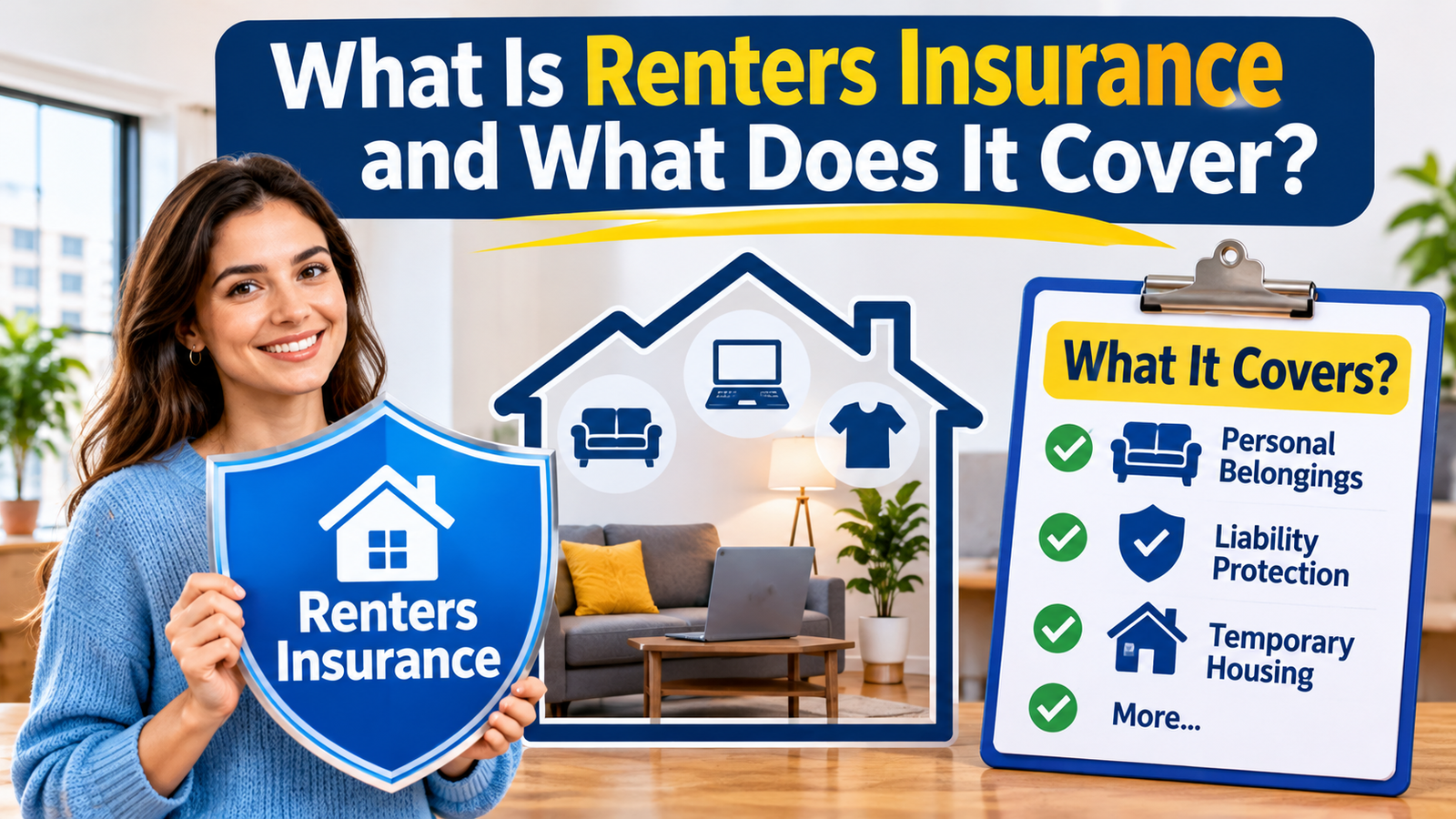
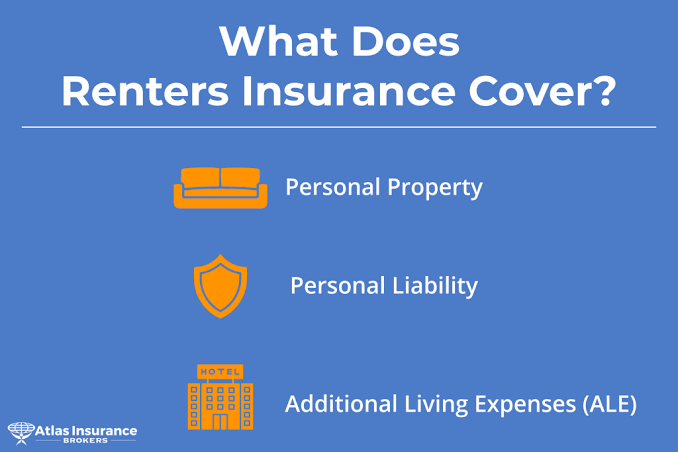
Renters insurance is a type of property insurance that helps protect people who rent an apartment, house, or condominium from certain financial losses. It typically covers personal belongings, personal liability, and additional living expenses when a covered event makes a rental home temporarily uninhabitable. Unlike homeowners insurance, renters insurance generally does not cover the building’s physical structure because that responsibility usually belongs to the property owner. Coverage may apply to events such as theft, fire, smoke damage, and certain types of water damage, depending on the policy. Understanding what renters insurance covers, what it excludes, and how claims work can help tenants make informed decisions about protecting their belongings and understanding their financial responsibilities.
1. What Is Renters Insurance?
Renters insurance, sometimes called tenants insurance, is an insurance policy designed for people who live in a property they do not own.
It provides financial protection against certain losses involving personal possessions and personal liability. Some policies also help cover additional living expenses when a covered event makes the rental property unsuitable for living.
For example, a tenant living in an apartment may experience a fire that damages furniture, clothing, electronics, and other personal belongings. If the cause of the damage is covered under the policy, renters insurance may help pay to repair or replace eligible items, subject to the deductible and policy limits.
How Does Renters Insurance Work?
A renter purchases a policy that specifies the types of protection included, coverage limits, deductibles, exclusions, and premium payments.
When a covered incident occurs, the policyholder can report the loss to the insurance company and submit a claim. The insurer reviews the circumstances, supporting documents, and applicable policy provisions before determining whether payment is available.
The amount paid depends on the type of loss, the policy’s coverage limits, the deductible, and whether personal property is insured at actual cash value or replacement cost.
Is Renters Insurance Different From Homeowners Insurance?
Yes. Homeowners insurance generally protects both the physical structure of an eligible home and the owner’s personal belongings, along with liability protection.
Renters insurance generally focuses on the tenant’s possessions and personal liability rather than the building itself.
This distinction is important because a landlord’s insurance policy typically protects the property owner’s building and financial interests, not the tenant’s personal belongings.
2. What Does Renters Insurance Cover?
Most standard renters insurance policies provide several important types of protection. However, the exact coverage depends on the insurer, policy language, and applicable state regulations.
A. Personal Property Coverage
Personal property coverage helps pay to repair or replace eligible belongings that are damaged, destroyed, or stolen because of a covered event.
Common examples of personal belongings include:
- Furniture, beds, tables, and chairs
- Clothing, shoes, and personal accessories
- Televisions, computers, and other electronics
- Kitchen appliances and household equipment
- Books, decorations, and personal collections
- Sports equipment and certain recreational belongings
Covered events may include fire, smoke, lightning, theft, vandalism, and certain types of accidental water damage.
Some policies also protect personal belongings when they are temporarily outside the rental home. For example, eligible property stolen from a hotel room or another location may receive coverage, subject to policy conditions and limitations.
B. Personal Liability Coverage
Personal liability coverage helps protect a renter financially if they are legally responsible for accidentally injuring someone or damaging another person’s property.
For example, imagine a visitor slips inside a rented apartment and suffers an injury. If the tenant is legally responsible, the liability portion of the policy may help cover eligible legal expenses, settlements, or damages, up to the policy limit.
Other situations may include accidentally damaging a neighbor’s property or causing certain types of accidental damage to someone else’s belongings.
Liability coverage is subject to exclusions, conditions, and limits. It does not cover every accident or every type of legal responsibility.
C. Additional Living Expenses Coverage
Additional living expenses coverage, sometimes called loss-of-use coverage, helps pay certain extra costs when a covered event makes a rental property temporarily uninhabitable.
Depending on the policy, eligible expenses may include:
- Temporary hotel accommodation
- Short-term rental housing
- Additional meal expenses
- Certain transportation or storage costs
This coverage generally focuses on expenses above the renter’s normal living costs rather than paying every expense during the displacement.
For example, if a kitchen fire makes an apartment temporarily unsuitable for living, the policy may help cover the additional cost of staying somewhere else while covered repairs are completed.
Coverage is subject to the policy’s limits, time restrictions, and other conditions.
D. Medical Payments to Others
Some renters insurance policies include medical payments coverage for guests who experience accidental injuries at the insured property.
This coverage may help pay eligible medical expenses without requiring the injured visitor to establish that the policyholder was legally responsible.
It is generally limited in scope and is different from personal liability coverage. The policy determines which expenses qualify and what exclusions apply.
3. What Is Not Covered by Renters Insurance?
Although renters insurance offers several types of protection, it does not cover every possible loss.
Understanding exclusions is important because certain events require separate coverage or additional policy provisions.
Common Renters Insurance Exclusions
Flood damage: Standard renters insurance generally does not cover damage caused by flooding from external sources, such as overflowing rivers or widespread surface water. Separate flood insurance may be necessary.
Earthquake damage: Earthquake-related losses are commonly excluded from standard renters policies. Separate coverage may be available depending on the location and insurance arrangements.
Normal wear and tear: Insurance generally does not pay for gradual deterioration, aging, or routine maintenance problems.
Pest damage: Damage caused by insects, rodents, and similar pests is commonly excluded.
Intentional damage: Losses intentionally caused by the policyholder are generally not covered.
Certain high-value belongings: Jewelry, collectibles, artwork, cash, and other valuable property may have special coverage limits. Additional coverage may be needed for certain items.
Roommate belongings: A roommate’s possessions are not automatically covered simply because both people share the same apartment. Coverage depends on the named insureds and policy provisions.
Does Renters Insurance Cover the Landlord’s Property?
Generally, no. Renters insurance is designed primarily to protect the tenant’s personal belongings and liability.
The landlord’s building, permanent fixtures, and structural components are generally covered under the property owner’s insurance arrangements.
However, if a tenant accidentally damages someone else’s property and is legally responsible, personal liability coverage may apply in certain circumstances. Damage to the landlord’s property is subject to specific policy language and exclusions.
4. How Renters Insurance Deductibles and Coverage Limits Work
Two important terms in a renters insurance policy are the deductible and coverage limit.
What Is a Renters Insurance Deductible?
A deductible is the amount the policyholder is responsible for paying toward a covered property loss before insurance benefits apply.
For example, imagine a renter has a $1,000 deductible and experiences a covered loss involving $5,000 in eligible personal property damage.
If the full amount is approved and no other limits or adjustments apply, the insurer may pay $4,000 after subtracting the deductible.
This example is hypothetical and illustrative only. Actual claim payments depend on the policy, covered damage, valuation method, and applicable conditions.
What Are Coverage Limits?
A coverage limit is the maximum amount an insurance company may pay for a particular type of covered loss.
Renters policies generally establish separate limits for personal property, liability, and additional living expenses.
Certain categories of belongings may also have smaller individual limits within the overall personal property coverage.
For instance, jewelry or valuable collectibles may have special restrictions. Policyholders should review these limits rather than assume the full value of every possession is automatically covered.
Actual Cash Value vs. Replacement Cost
Renters insurance may use different methods to calculate the value of damaged or stolen property.
- Actual cash value (ACV): Generally considers an item’s value at the time of the loss, including depreciation.
- Replacement cost value (RCV): Generally considers the cost of replacing an eligible item with a new item of similar kind and quality, subject to policy conditions.
For example, imagine a renter purchased a television for $1,500 several years ago. Its current depreciated value is estimated at $500.
Under an actual cash value policy, the eligible payment may be based on the lower current value. Under replacement cost coverage, the policy may reimburse the qualifying cost of a comparable replacement, subject to the contract and claim settlement requirements.
This example is hypothetical and does not represent a guaranteed claim payment.
5. How Much Renters Insurance Coverage Do Tenants Need to Understand?
There is no single coverage amount that applies to every renter. The appropriate amount depends on personal belongings, financial circumstances, liability considerations, and the policy’s available options.
A useful starting point is understanding the approximate value of personal possessions.
Create a Home Inventory
A home inventory is a record of belongings and their estimated values.
It can help tenants understand how much property they own and provide documentation if they need to submit a claim.
A basic inventory may include:
- Item descriptions and estimated values
- Purchase receipts, when available
- Photographs or videos of belongings
- Serial numbers for electronics and equipment
- Records of valuable jewelry, artwork, or collectibles
Keeping digital copies in a secure location separate from the rental property can make records easier to access.
Review Liability Protection
Personal liability coverage is another important part of a renters policy.
Tenants should understand the policy’s liability limit, covered situations, exclusions, and whether additional protection is available.
The amount of protection provided by a policy is not necessarily the same as the amount of financial responsibility someone could face after an accident.
Understand Roommate and Family Coverage
People living together should not assume they are all automatically insured under one renters policy.
Some policies may extend coverage to certain household members, while unrelated roommates may need separate arrangements. The insurer’s definitions of insured persons and household residents determine who receives protection.
6. How to File a Renters Insurance Claim
When a covered loss occurs, the claims process generally involves notifying the insurance company, documenting the damage, and providing information needed to evaluate the claim.
Although procedures differ among insurers, the following steps are commonly involved.
- Prevent further damage: Take reasonable steps to protect the property from additional loss when it is safe to do so.
- Document the incident: Photograph or record damaged belongings and the affected areas.
- Report the loss: Contact the insurance company through its approved claims process.
- Prepare an inventory: List damaged or stolen items and provide available receipts or other supporting records.
- Cooperate with the investigation: Respond to reasonable requests for information and documentation.
- Review the settlement: Understand the insurer’s coverage decision, deductible, valuation method, and any applicable limits.
For theft or vandalism, a police report may be requested or required under certain policy conditions. Keep copies of communications and documents related to the claim.
A claim does not automatically result in payment. The insurer must determine whether the event and resulting damage fall within the policy’s coverage.
7. Common Misunderstandings About Renters Insurance
Several misconceptions can lead renters to misunderstand what their policies actually provide.
Misunderstanding 1: The landlord’s insurance protects everything inside the apartment.
A landlord’s policy generally protects the building and the owner’s property interests. It typically does not cover a tenant’s personal belongings.
Misunderstanding 2: Renters insurance covers every type of water damage.
Certain accidental water losses may be covered, such as damage from a sudden plumbing failure. Flooding from external sources is generally excluded from standard renters policies.
Misunderstanding 3: Every valuable possession is covered for its full value.
Policies may impose special limits on jewelry, artwork, collectibles, and other high-value belongings. Additional coverage may be available for qualifying items.
Misunderstanding 4: Renters insurance only protects belongings inside the apartment.
Some policies extend personal property protection to belongings temporarily outside the rental home. However, geographical restrictions, exclusions, and special limits may apply.
Misunderstanding 5: Having renters insurance guarantees that every claim will be approved.
Insurance companies review claims according to the policy contract. Coverage depends on the cause of loss, applicable exclusions, documentation, and other policy requirements.
Key Takeaways
- Renters insurance helps protect tenants’ personal belongings and provides certain liability protections.
- Most policies include personal property, personal liability, and additional living expenses coverage.
- A landlord’s insurance generally protects the building rather than the renter’s personal possessions.
- Floods, earthquakes, normal wear and tear, and certain other losses are commonly excluded from standard renters policies.
- Deductibles, coverage limits, special restrictions, and actual cash value or replacement cost provisions affect how claims are settled.
Frequently Asked Questions (FAQs)
1. Is renters insurance required by law in the United States?
Renters insurance is not generally required by federal law. However, a landlord may include an insurance requirement in a rental agreement, subject to applicable state and local laws. Requirements can differ depending on the location and lease terms. Tenants should review their rental agreements and understand any insurance obligations that apply to their housing arrangements.
2. Does renters insurance cover theft?
Yes, theft is generally a covered event under many standard renters insurance policies. Coverage may apply to eligible personal belongings stolen from the rental home and, under certain conditions, from locations outside the home. However, deductibles, special limits for valuable items, exclusions, and documentation requirements can affect the amount payable.
3. Does renters insurance cover water damage?
Renters insurance may cover certain accidental water damage, such as damage caused by a sudden plumbing failure or an overflowing household appliance. However, standard policies generally exclude external flooding and may exclude gradual leaks, maintenance-related problems, or water backup unless additional coverage applies. The exact cause of damage and policy wording determine whether a claim qualifies.
4. Does renters insurance cover a roommate’s belongings?
Not necessarily. A renters policy generally protects the named insured and other individuals who qualify as insured persons under its definitions. An unrelated roommate may not automatically receive coverage simply by sharing the same apartment. Roommates should review the policy’s household-member provisions and understand whether separate coverage arrangements are necessary.
5. Does renters insurance cover temporary housing after a fire?
Many renters policies include additional living expenses coverage that may help pay qualifying extra housing costs when a covered event makes the rental property uninhabitable. This can include temporary accommodation and certain additional expenses. Payment depends on the cause of damage, policy limits, applicable time restrictions, and the insurer’s claim assessment.
Conclusion
Renters insurance provides an important form of financial protection for people living in rented homes, apartments, and condominiums. Understanding what renters insurance covers helps tenants distinguish between personal property protection, liability coverage, and additional living expenses. It also helps clarify the difference between a landlord’s building insurance and a tenant’s personal insurance responsibilities. Although renters policies offer several useful protections, they also contain exclusions, deductibles, and coverage limits that vary by contract and state. Reviewing these details and understanding the claims process can help renters make informed decisions about their insurance arrangements.
Sources and Further Reading
The following reputable US organizations provide educational resources about renters insurance, insurance policies, and consumer protection.
- National Association of Insurance Commissioners (NAIC): Consumer guidance explaining renters insurance, personal property protection, liability, and additional living expenses.
https://content.naic.org/article/consumer-insight-rent-protecting-your-belongings-renters-insurance - Insurance Information Institute (Triple-I): Educational information about renters insurance, personal possessions, liability, additional living expenses, and policy exclusions.
https://www.iii.org/article/renters-insurance - North Carolina Department of Insurance: A consumer guide explaining renters insurance coverage categories, covered events, and common policy limitations.
https://www.ncdoi.gov/documents/consumer/publications/consumer-guide-renters-insurance/open - California Department of Insurance: Consumer information about renters insurance and the protection it may provide for personal belongings and liability.
https://www.insurance.ca.gov/01-consumers/105-type/95-guides/upload/Renters-Insurance.pdf - Your State Department of Insurance: State-specific information about insurance regulations, consumer rights, and renters insurance requirements.
https://content.naic.org/state-insurance-departments
Disclaimer
This article is intended for educational purposes only and does not constitute insurance, financial, tax, medical, or legal advice. No guarantees or promises are made regarding coverage, claim approval, savings, premiums, or any other results. All examples are hypothetical and provided for illustration only. This article does not state time-sensitive figures such as premiums, deductibles, coverage limits, or enrollment dates; readers should consult official sources, including the NAIC and their state’s Department of Insurance, for current information. Consult a licensed insurance professional or qualified advisor before making insurance decisions.
About the Author
[Author Name] is [credentials/experience in insurance, finance, writing, or research]. [One or two sentences about expertise. The author focuses on making insurance and personal finance concepts easier for everyday readers to understand.]